
We later discover that the “engineers” were really in town to document the archaic and brutal grieving rituals the local townspeople submit themselves at times of mourning. But along the way, the viewer is invited to experience the new world just as the town’s visitors do. The film is an investigation – a philosophical examination into the nature of man, existence and civilization.
Kiarostami has a wonderful ability to take the rustic and mundane of everyday life in a normal rural Middle Eastern town – and show the mysterious and beautiful moments as poetry. The script frequently recites poetry throughout the film while the images display equally deeply poetic lines. And the continual play of the “engineer” having to drive to a mountain top to find a cellular signal is the perfect metaphor for the stories plot line of the modern age set against an old world where modern invention is not needed. The film is a beautiful tale of contrast that is translated by subtitles but not in need on translation of truth.
Thursday, June 5
Review: The Wind Will Carry Us


Friday, May 30
Review: Spring, Summer, Fall, Winter... and Spring
 Kim Ki-Duk's Spring, Summer, Fall, Winter... and Spring is a bold, beautiful and breathtaking glimpse at Buddhism. The director delivers stunning visuals full of artistic originality. Lessons learned are slow and patient and done with little or no dialogue.
The setting is a monastery that floats on a lake surrounded by mountains and the events take place over the course of about 50 years. The story is broken into five chapters, one for each season in the title. Not only do the chapters take place during those seasons, but they are also corresponding to times in one man’s life as he grows from small child to an old man. Every chapter starts with a title card of the season. Then ornate doors, which sit on the banks of the lake, open up to reveal a monk's monastery.
It's more a fable than a storyline, because it can applied to how Buddhists would describe the world, and what they would expect of it, what they wish to achieve. The symbolism is very heavy, but does not distract from the movie -- it's the kind of film symbolism that you pick apart after the film that grants greater appreciation and understanding, but does not require comprehension during (else it'd be pretentious).

Monday, May 19
Review: George Washington
George Washington is a bold, beautiful and honest look at a rural ghetto Carolina town through the eyes of four pre-teen children. Growing up in poor conditions with little to no parental supervision, the kids are on their own. This freedom gives the kids opportunity to explore, create and dream – while it also prohibits healthy relationships, positive development and moral standards.
The David Gordon Green film follows the children through long summer days of independence. On their own, they confront hook-ups and break-ups with only themselves to talk them through. On their own, they talk about real-life questions of spirituality. And on their own, they are confronted with a life-and-death scenario that changes their lives.
This is where the film both makes and breaks itself. Each kid deals with the scenario in her/his own way. Some turn toward a negative path of looting and stealing. Others become onlookers, waiting as bystanders. And George takes the event and uses it as a launching pad towards a new life as a “hero” trying to save the world, starting with the simple act of directing traffic at the town traffic stop.
Craig claimed during class that David Gordon Green’s George Washington is where the new generation of filmmakers is heading. Although the bold, creative and honest look at a slice of America is a forthright and telling vision of one director’s story – I do not believe the film industry will ever completely move towards a completely independent model of filmmaking.

Friday, May 16
Review: Badlands
Director Terrence Malick paints a pretty picture by taking his time to develop each shot, conversation, and character. You put them all together and you have Badlands, a beautiful motion picture of American sensationalism and ironic heroism created by a mass media whirlwind.
The setting is a Midwestern town, where Martin Sheen plays a malcontent 20-something garbage man named Kit who stumbles upon a teenage dreamer in Sissy Spacek starlet of Holly. The conversation starts innocent enough, but soon the young lovers turn into naïve dreamers caught up in a killing spree only a true story could produce.
Yes, the movie is based on a true story of the 1958 killings that left 11 people dead and the nation in an odd tension built between fear of the vigilante killers and the media darlings they had become.
The observation and patience that Malick displays in Badlands is the key to the film. The film is truly transcendental in that the film allows the viewer to live in the world of the characters on screen. It is an oddly enjoyable experience as we are allowed to ride along with the killers in a journey that cannot end well.

Friday, May 9
Review: Light Sleeper
The main issue is that the successful films listed above were placed in the hands of an exceptional director in Martin Scorsese. Paul Schrader is a phenomenal writer. But he is a poor director. Leave the filmmaking to the Scorsese's of the world, Schrader. Stick to the writing.
What is most confusing is the elements of the film seem like the right choices. Light Sleeper has an interesting main character in Willem Dafoe's drug dealing philosopher, an epic cityscape in New York City, and a life changing story line. Yet, the film falls flatter than a Ashley Simpson note.
Tuesday, May 6
Review: Performing Rites

Drawing as well upon the work of Franco Fabbri, Frith lays out a series of “genre rules” which he claims govern the way we listen to music. Asserting that “popular musical pleasures can only be understood as genre pleasures” [91], Frith writes that genre analysis is narrative analysis: “It must refer to an implied community, to an implied romance, to an implied plot” [90-91]. Genres are a way for audiences and performers to bond over the retelling of a (believed to be) common story. And when a story is told, Frith argues, certain rules come into play:
Such rules refer to the ways in which “meaning” is conveyed… How is “truth” or “sincerity” indicated musically? How do we know what music is “about”? Consider, for example, how different genres (opera, folk, rock, punk) read singers: as the protagonists of their songs? As revealing themselves? Rules here, in other words, concern musical expressivity and emotion; they determine the significance of the lyrics—different genres, for example, having quite different conventions of lyrical realism: soul versus country, the singer/songwriter versus the disco diva. [91]
In other words, one could take the lyrics from a country song and present them to an audience in a “punk” style (musical interpretation or delivery), and this simple act of reinterpretation could drastically change those words’ meaning. This is especially relevant when considering the “I” in popular music lyrics: does it refer to a personal experience or a collective one? For instance, when Johnny Cash sings, “Well, I woke up Sunday morning / With no way to hold my head that didn't hurt” in his song “Sunday Morning Coming Down” is he speaking as himself, or as the voicing of a regional experience of a hangover? The answer seems to change somewhat depending on the genre in question.
 A second Johnny Cash song, his Nine Inch Nails cover of “Hurt” is another strong example of the how a genre can change the meaning of lyrics. When Cash sings, “What have I become, my sweetest friend? Everyone I know, goes away in the end” the lyrics can be interpreted as a reflection at the end of a long life. But the original meaning of Trent Reznor’s lyrics changed from a place of despair to reflection. Reznor later lamented that when producer Rick Rubin first asked if Cash could cover his song, he was “flattered” but worried that “the idea sounded a bit gimmicky.” Reznor became a fan of Cash’s version, however, once he saw the music video:
I pop the video in, and wow… Tears welling, silence, goose-bumps… Wow. I just lost my girlfriend, because that song isn’t mine anymore… It really made me think about how powerful music is as a medium and art form. I wrote some words and music in my bedroom as a way of staying sane, about a bleak and desperate place I was in, totally isolated and alone. (Somehow) that winds up reinterpreted by a music legend from a radically different era/genre and still retains sincerity and meaning — different, but every bit as pure. [Alternative Press #194. September 2004]
Frith argues that listening itself is a performance, both social gesture and bodily response. From how they are made to how they are received, popular songs shape our understanding of what all music means. But the listener’s experience determines the “meaning” – making it an aesthetic matter and highly personal. I love the way Frith brings the conversation about musical genre and interpretation into the realm of sociology. The “popular” in popular music demands a further analysis. And Frith does it well.
Friday, May 2
Review: Andrei Rublev

The violence, political persecution, and crisis of faith are evident throughout – but the movement from realism to transcendence was not so clear. In fact, besides the wonderful dialogue between the painter monk and other characters throughout the 3:25 minutes, coupled with striking cinematic photography, I fail to see where the divine can enter the conversation. Yes, the realism and human experience fits the transcendental definition outlined by Schrader, but the random execution and brutality of darkness fail to reach the divine and instead bathe in the depravity of human nature.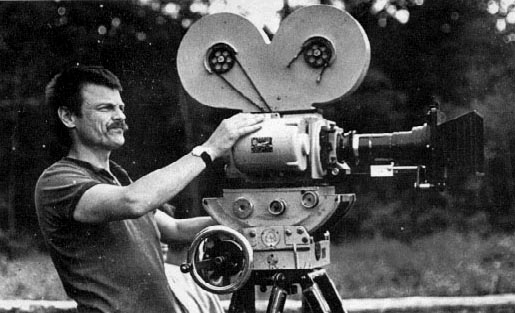
I was praying for a Bresson montage during the violent scenes. Even Rocky had a montage! This may come to a surprise for those that know my favorites movies include Full Metal Jacket, The Killer, The Shining, and The Silence of the Lambs. But the long takes of death and pillage of war in Andrei Rublev was too much to bear at times. What was the point? War is evil? Okay, I get it. Thanks for opening my eyes, Tarkovsky. If this is what you choose to do with Bazin’s evolution of the image, I’d rather go visit Rublev’s iconography and find meaning in the stillness. Sweet, sweet stillness.
Wednesday, April 23
Review: Pickpocket
 “The supernatural in film is only the real rendered more precise,” Bresson says. “Real things close up.” Schrader reminds us that Bresson’s viewpoint of the everyday reality consists of elimination rather than addition or assimilation; a reminder that is clearly seen in the renowned classic film Pickpocket.
Pickpocket is not a classic because of phenomenal acting performances or jam-packed action sequences, but rather the film is a classic because of the film as a whole, with an extremely well written script, and an exceptionally complex and layered lead character. And in the end, I agree with Joshua Lim’s connection that the “story is crucial” to Bresson’s achievement in Pickpocket.
One might be taken aback at the non-acting or static mundane shots of life. But they are life, the scenarios, dialogue, struggle and reality of life. Bresson draws the viewer into the film by removing the acting and action, only to have the story remain, in its skillfully crafted simplicity. The stark remainder makes the high points in the story higher, the low points lower, and the pivotal scenes breathtaking.
The moral journey in the film also grasps the transcendental style better than the films we have previously viewed in class. The pickpocket believes his worldview of bettering others with guile and skill brings balance and serves an ultimate good in the world. His belief is a selfish outlook that only sees his power and task at hand, rather than gaining a higher perspective where a love is waiting and a motive of sacrifice for others could be a goal greater than the ultimate lift.

Monday, April 14
Review: Tokyo Story
It is amazing that when watching a film, how much your state of mind can effect the experience of the film. About two years ago, I was in a different place with my life, working 50+ hours a week, rushing from place to place, a busy body in a big city. During that time, I attempted to watch Yasujiro Ozu's Tokyo Story, and fell flat on my face. I couldn't make it through an hour without fast-forwarding or losing my concentration on the cinematic moments carefully portrayed within Ozu's classic film.
Now, two years later, I have learned how to slow down, I have learned that meditation can improve one's life, I have learned how to appreciate the mundane or real-life scenario. That is the beauty of transcendental style of film that Schrader believes the "Asian culture" of Zen thinking fits almost perfectly. The pairing makes sense when observing how the characters of Tokyo Story react to both the living of life and the movement of death. The children in the film were caught up in the Western industrial mindset of schedules, time, and work. They could not appreciate the nuances of life and enjoy the subtle joy of the living of that life. This is in stark contrast to the parents world of a Zen mindset, which is one of slowing down to think and meditate. They in turn do appreciate the little things like breathing or family.

Friday, April 11
Review: The Passion of Joan of Arc
While watching Carl Dreyer’s The Passion of Joan of Arc, I was taken into the agony, confusion and struggle of Joan’s world. With deft camera work, Dreyer placed me into the room with the judges, viewing every detail and expression in both Joan and the judges condemning her. It was a journey of heart, one where the emotions of death and the divine were heavy after the experience.
Even before discussing the pros and cons of the added “soundtrack” to the silent film production, I felt the music was not needed to understand each and every nuance of dialogue, feeling or performance. The direction did that work for us. With quick cuts, extreme close-ups, and perfectly framed characters, the message that the filmmaker was attempting to express was as clear as day. Although moving in itself, the music was not needed for a powerful film experience.
Wednesday, April 9
Review: Carolyn Osiek "Beyond Anger"
[Below is a review of Carolyn Osiek’s book Beyond Anger: On Being a Feminist in the Church that I wrote for a David Scholer's class "Women, the Bible, and the Church" I am taking in my final quarter at Fuller. Whoohoo!] Carolyn Osiek’s book Beyond Anger: On Being a Feminist in the Church, is a powerful message of concern and courage to women who are called to positions of leadership within the church. Osiek draws from personal experience and other women’s stories to give an account of women dealing with the anger and frustration of the church’s gender-bias and patriarchal oppression. According to Osiek, women “sell ourselves short in order not to offend” [10], especially in relation to the powerful Christian symbol of the cross. Osiek explains:
"Women are to imitate the victim Christ while at the same time they are denied any possibility of fully identifying with him. Doomed to be like him in suffering and humiliation, they are equally doomed to be unlike him in power, authority, or exaltation." [10]Osiek continues in the first chapter to encourage women that they need not give up their faith because of its abuse by those in power. She uses the language of fear, danger, and enslavement and asks women to move into language of courage, light, and liberation. Instead of being devastated by a self-perception of “the myth of male superiority” [10], women can recognize their repression and realize the emptiness of the myth. The newfound awareness and realization of the reality of a male dominated society leads women to anger, which Osiek believes is a “useful emotion” [13]. But women may choose not to appropriately express that it, and the built-up repressed anger can lead to depression and sadness with the angry women being “forced to find her support predominantly among other angry women” [14]. Although “anger is a completely appropriate response to the awareness of oppression” [16], Osiek warns that “depression, emptiness and joylessness are symptomatic of the experience of impasse” [23] which she believes is not a final resting place for the anger.
In the second chapter, Osiek explains different definitions of possible “feminism” and considers the different ways she perceives women as coping. The “marginalist” remains an angry person “whose anger festers and goes only in destructive directions because her energies have no creative outlet” [28]. The “loyalist” raises questions from within the church, but does so “quietly and loyally” [30]. The “symbolist” concentrates her attention on the feminine characteristics of God, but is in danger of advocating superiority of the feminine over the masculine. The “revisionist” believes that “the patriarchal cast of the Judeo-Christian tradition is due more to historical and cultural causes than theological ones” [38]. Finally the “liberationist” is defined as one who believes in the conversion of society, but picks and chooses Biblical text that is relevant to the society in which we live. Osiek does not present one coping response or method above another, but believes that women have “the responsibility to consciously choose our ways of dealing with the consequences. To let them be chosen for us is to fail to assume responsibility for our own destiny” [43].
The third chapter of the book explains that an “impasse” is reached by each of these coping responses or methods. In order to breakthrough the impasse, women must move towards a “conversion” that discovers of new perspective where the “previously acceptable is so no longer” [45]. Osiek explains the individual spiritual conversion that each woman must accept, and also outlines the institutional conversion of the church that must take place. The institutional conversion hopes for a future where power can be “gradually and willingly shared” [57-58]. Both conversions are interrelated in that “just as there is no structural conversion without personal conversion, so there is no structural transformation without personal transformation” [61]. I believe this is where Osiek is prophetic in her alliteration of the feminist struggle. For true transformation of the institution must come from individual transformation, a transformation from within the institution. This transformation does not come without a price. “There is a price to be paid for human growth – soul-searching honesty required to follow through on insight” [63], Osiek explains. Power and gender roles must be “recovered, reclaimed, and reappropriated into a new context where it will no longer aide the cause of oppression and passivity” [65].
Osiek’s last chapter reflects on the paradox and “contradiction” of the “cross” [74]. Osiek explains that through the pain of the cross comes life. And furthermore, that through the ability to “freely surrender” [79] comes a true sense of self and liberation. The message is not to lie down and take it:
"It is not forgive and forget, as if nothing wrong had ever happened, but forgive and go forward, building on the mistakes of the past and the energy generated by reconciliation to create a new future." [76]This is a message of hope springing from the repressed anger of injustice and oppression. Osiek believes there is “no transformation of a person or society without suffering” and that “only the suffering will devote themselves to alleviating suffering” [83]. This is where the power struggle comes full circle towards a message of empowerment through the anger and suffering subjected by an oppressive patriarchal society. Through the experience of pain comes an awareness that “leaves ignorance behind and arrives at the illuminating knowledge of full feminist consciousness” [84].
Osiek concludes with practical strategies to women who are in the struggle towards equality. She reiterates the exclamation that women must choose their own beliefs and strategies and not let “them to be chosen for you” [87]. Osiek appropriately ends with a reminder that, “the Church of the present and the future is counting on you” [87].
My initial response to the book is two-fold. It is clear that although Osiek was venting her frustrations of living out her calling in an oppressive patriarchal society, she did so by treading lightly around the subject of oppression and women’s suffrage. Dr. Scholer explained that Osiek has later admitted that, “We sell ourselves short in order not to offend.” And her lament that women must “have the strength to be weak” [87] demonstrates this tiptoeing around the subject in order not to condemn the oppressors of women: men. But an attack on the men that besiege women isn’t the goal of the book. Rather, Osiek presents a text designed to help women deal with the oppression of “male superiority” that the Church culture still presents.
My own views on women in leadership have been shaped by my family upbringing upholding the value of women as equal in every way, my studies as a seminarian at Fuller Theological Seminary and by my personal ministry in the Emerging Church movement for the past 6 years. Most of that time, I was single. And now in the past few years, I have been married to a supportive Christian layperson, a self-proclaimed feminist quite willing to take on any oppressor. As I studied the scriptures, my views strengthened the support of women in leadership that, in order to be true to the whole of scripture, I had to support the notion that women, who were so gifted and called by God should exercise responsible leadership in both society and the church. In addition, I am proud to say that I am part of the online Facebook group: Real Men are Feminists.
If I had to chose which of Osiek’s outlined coping methods I fall into, I would definitely say that the “liberationist” view a “hermeneutic of suspicion” [41] best defines my viewpoint and role in the feminist movement. It is easy to focus on the anger and repression of the story Osiek details. But I naturally migrate towards the positive affirmation and encouragement Osiek reflects. Her statement that, “There is more than one way to read history, and that we have been traditionally locked into only one perspective: the patriarchal one” [38], is a wise reflection on the historical place of the oppression of women and has an underlying message of hope for the future. It is a brilliant tactic. The briefly mentioned reminder of the book is that, “the challenge and the goal is reform” [38]. Unfortunately, I think Osiek’s concluding strategies of surviving and thriving in the culture are not a message of reform, but one of coping and dealing with the anger of a society that cannot change.
Even as a man reading about women struggling in a oppressive culture, the hope of “transformation of human society through conversion” [41] resonates within my soul. I am admittedly saddened by the stories of struggle towards equality in the Church that women are forced to deal with, while at the same time encouraged and fired up about the thought of women and men choosing a destiny of equality of a history of traditional patriarchal structures. Osiek’s belief that we can discover a “new perspective from which what was previously acceptable is so no longer” [45], is one that both men and women can hold. The price must be paid from both sexes to bury oppression in a final resting place of history, and to reclaim a present reality of true equality.

