
German filmmaker Philip Gröning apparently spent about six months living as a monk before attempting to capture their lives in film. And his patience and persistence paid off. Into Great Silence, the documentary about the Grande Chartreuse Monastery in the French Alps lived up to my expectations. The silence associated with the lives of these monks was captured by the endless silence (2:40 hours) of the film. That in itself is a story.
Apparently, the filmmaker went to the abbot to discuss his idea of a film about the monks. The abbot responded somewhat positively and said that he would get back to him. Reply he did… 16 years later! Time passing through an hourglass. The filming was a study in time itself. Gröning captured light and darkness, color and shapes extraordinarily well. It was like watching an infinite number of slides merging one into the next effortlessly. As the viewer slows down and moves into the world of the monastery, the endless silence changes the sounds of the simple task into a chorus of movement and meditation.
The entire quarter moved towards being able to take the gift of transcendental film. Fridays have been an interesting ride and truly a gift perfectly placed at the end of a long week of studies. Being able to slow down and observe the world through new eyes of a filmmaker was not only a gift of transcendence, but a gift of transportation away from the hustle and bustle of a seminarian life and into a tranquility of quiet reflection.
Friday, June 13
Review: Into Great Silence


Thursday, June 5
Review: The Wind Will Carry Us

We later discover that the “engineers” were really in town to document the archaic and brutal grieving rituals the local townspeople submit themselves at times of mourning. But along the way, the viewer is invited to experience the new world just as the town’s visitors do. The film is an investigation – a philosophical examination into the nature of man, existence and civilization.
Kiarostami has a wonderful ability to take the rustic and mundane of everyday life in a normal rural Middle Eastern town – and show the mysterious and beautiful moments as poetry. The script frequently recites poetry throughout the film while the images display equally deeply poetic lines. And the continual play of the “engineer” having to drive to a mountain top to find a cellular signal is the perfect metaphor for the stories plot line of the modern age set against an old world where modern invention is not needed. The film is a beautiful tale of contrast that is translated by subtitles but not in need on translation of truth.
Friday, May 30
Review: Spring, Summer, Fall, Winter... and Spring
 Kim Ki-Duk's Spring, Summer, Fall, Winter... and Spring is a bold, beautiful and breathtaking glimpse at Buddhism. The director delivers stunning visuals full of artistic originality. Lessons learned are slow and patient and done with little or no dialogue.
The setting is a monastery that floats on a lake surrounded by mountains and the events take place over the course of about 50 years. The story is broken into five chapters, one for each season in the title. Not only do the chapters take place during those seasons, but they are also corresponding to times in one man’s life as he grows from small child to an old man. Every chapter starts with a title card of the season. Then ornate doors, which sit on the banks of the lake, open up to reveal a monk's monastery.
It's more a fable than a storyline, because it can applied to how Buddhists would describe the world, and what they would expect of it, what they wish to achieve. The symbolism is very heavy, but does not distract from the movie -- it's the kind of film symbolism that you pick apart after the film that grants greater appreciation and understanding, but does not require comprehension during (else it'd be pretentious).

Monday, May 19
Review: George Washington
George Washington is a bold, beautiful and honest look at a rural ghetto Carolina town through the eyes of four pre-teen children. Growing up in poor conditions with little to no parental supervision, the kids are on their own. This freedom gives the kids opportunity to explore, create and dream – while it also prohibits healthy relationships, positive development and moral standards.
The David Gordon Green film follows the children through long summer days of independence. On their own, they confront hook-ups and break-ups with only themselves to talk them through. On their own, they talk about real-life questions of spirituality. And on their own, they are confronted with a life-and-death scenario that changes their lives.
This is where the film both makes and breaks itself. Each kid deals with the scenario in her/his own way. Some turn toward a negative path of looting and stealing. Others become onlookers, waiting as bystanders. And George takes the event and uses it as a launching pad towards a new life as a “hero” trying to save the world, starting with the simple act of directing traffic at the town traffic stop.
Craig claimed during class that David Gordon Green’s George Washington is where the new generation of filmmakers is heading. Although the bold, creative and honest look at a slice of America is a forthright and telling vision of one director’s story – I do not believe the film industry will ever completely move towards a completely independent model of filmmaking.

Friday, May 16
Review: Badlands
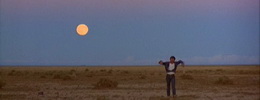
Director Terrence Malick paints a pretty picture by taking his time to develop each shot, conversation, and character. You put them all together and you have Badlands, a beautiful motion picture of American sensationalism and ironic heroism created by a mass media whirlwind.
The setting is a Midwestern town, where Martin Sheen plays a malcontent 20-something garbage man named Kit who stumbles upon a teenage dreamer in Sissy Spacek starlet of Holly. The conversation starts innocent enough, but soon the young lovers turn into naïve dreamers caught up in a killing spree only a true story could produce.
Yes, the movie is based on a true story of the 1958 killings that left 11 people dead and the nation in an odd tension built between fear of the vigilante killers and the media darlings they had become.
The observation and patience that Malick displays in Badlands is the key to the film. The film is truly transcendental in that the film allows the viewer to live in the world of the characters on screen. It is an oddly enjoyable experience as we are allowed to ride along with the killers in a journey that cannot end well.
Friday, May 9
Review: Light Sleeper
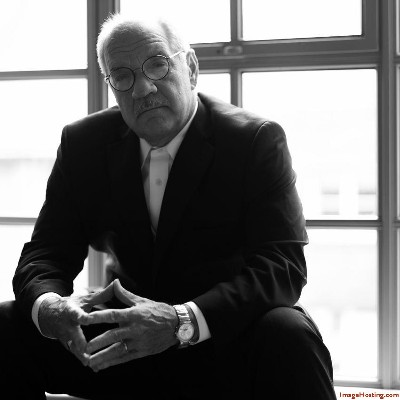
The main issue is that the successful films listed above were placed in the hands of an exceptional director in Martin Scorsese. Paul Schrader is a phenomenal writer. But he is a poor director. Leave the filmmaking to the Scorsese's of the world, Schrader. Stick to the writing.
What is most confusing is the elements of the film seem like the right choices. Light Sleeper has an interesting main character in Willem Dafoe's drug dealing philosopher, an epic cityscape in New York City, and a life changing story line. Yet, the film falls flatter than a Ashley Simpson note.
Wednesday, April 23
Review: Pickpocket
 “The supernatural in film is only the real rendered more precise,” Bresson says. “Real things close up.” Schrader reminds us that Bresson’s viewpoint of the everyday reality consists of elimination rather than addition or assimilation; a reminder that is clearly seen in the renowned classic film Pickpocket.
Pickpocket is not a classic because of phenomenal acting performances or jam-packed action sequences, but rather the film is a classic because of the film as a whole, with an extremely well written script, and an exceptionally complex and layered lead character. And in the end, I agree with Joshua Lim’s connection that the “story is crucial” to Bresson’s achievement in Pickpocket.
One might be taken aback at the non-acting or static mundane shots of life. But they are life, the scenarios, dialogue, struggle and reality of life. Bresson draws the viewer into the film by removing the acting and action, only to have the story remain, in its skillfully crafted simplicity. The stark remainder makes the high points in the story higher, the low points lower, and the pivotal scenes breathtaking.
The moral journey in the film also grasps the transcendental style better than the films we have previously viewed in class. The pickpocket believes his worldview of bettering others with guile and skill brings balance and serves an ultimate good in the world. His belief is a selfish outlook that only sees his power and task at hand, rather than gaining a higher perspective where a love is waiting and a motive of sacrifice for others could be a goal greater than the ultimate lift.

Saturday, January 12
Response: Michael Huang's Blog [Week 1]
You had me at Pedro. Michael Huang's observation on his January 9th blog post caught my eye for more reasons than the Pedro The Lion reference. Yes, I find myself at time like one of the Bob's on Office Space saying, "I celebrate his entire collection," about Pedro's music. But I too echo Michael's questions about "witnessing" and believe that your life is the best witness you can have rather than preaching the Good News to your friends and family. Sometimes just following the wise words of Matthew McConaughey's Wooderson [McConaughey's best and most famous role, probably due to the distinct possibility that he's not acting and just playing himself in the film] in Dazed and Confused is a much nobler path:

The reason I am drawn to Pedro The Lion is because David Bazan is a Christian believer that stays out of the Christian music scene, instead choosing to play his music to the popular culture at large. It's a testament both to his struggle with the institutional systems of church and his believe that his faith is better served in song outside the corporate structure of Christian labels. I've had the blessing of being able to commune with David and other Seattle musicians through old roommates in the local Seattle music "scene." The musicians that choose to be musicians in popular music over the Christian music scene have my utmost respect, for they are in effect "witnessing" through their lives to many more people than you or I can on a daily basis. From David Bazan to Rosie Thomas to Sufjan Stevens to The Pale Pacific, musicians of faith struggling with the same life questions that we struggle with in lyrical harmony is a wonderful thing.

